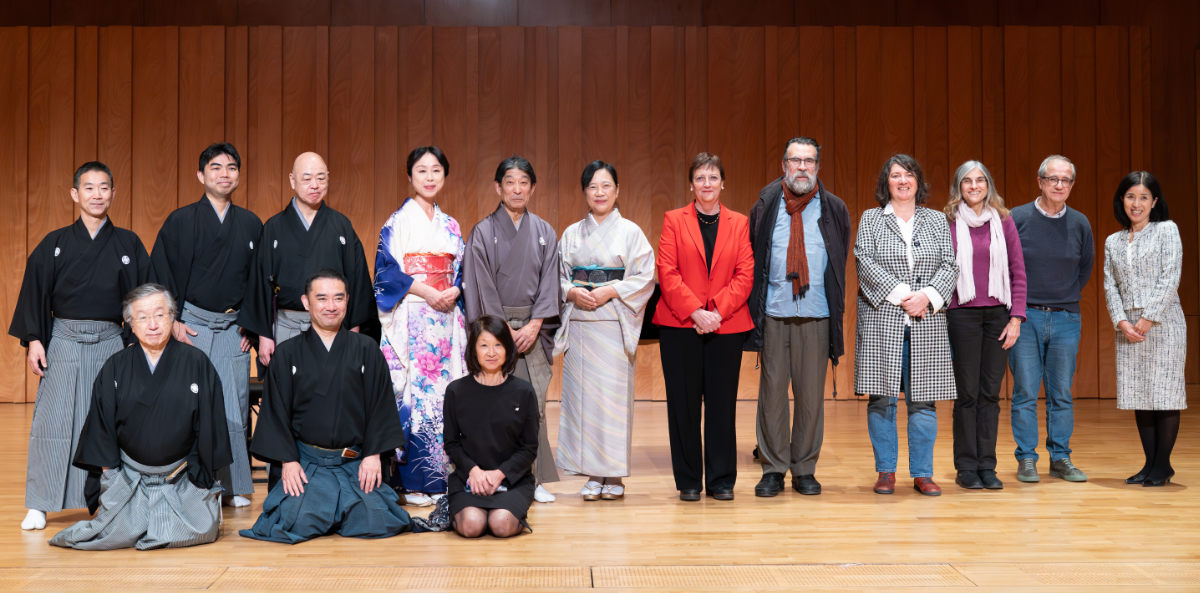
On November 26, as part of Catalonia-Japan Year 2025, Mu:Arts Japan, in collaboration with the Liceu Conservatory Foundation and the Consulate of Japan, presented a unique encounter between two artistic worlds: classical Japanese Noh theater and the piano music of Catalan composer Frederic Mompou.
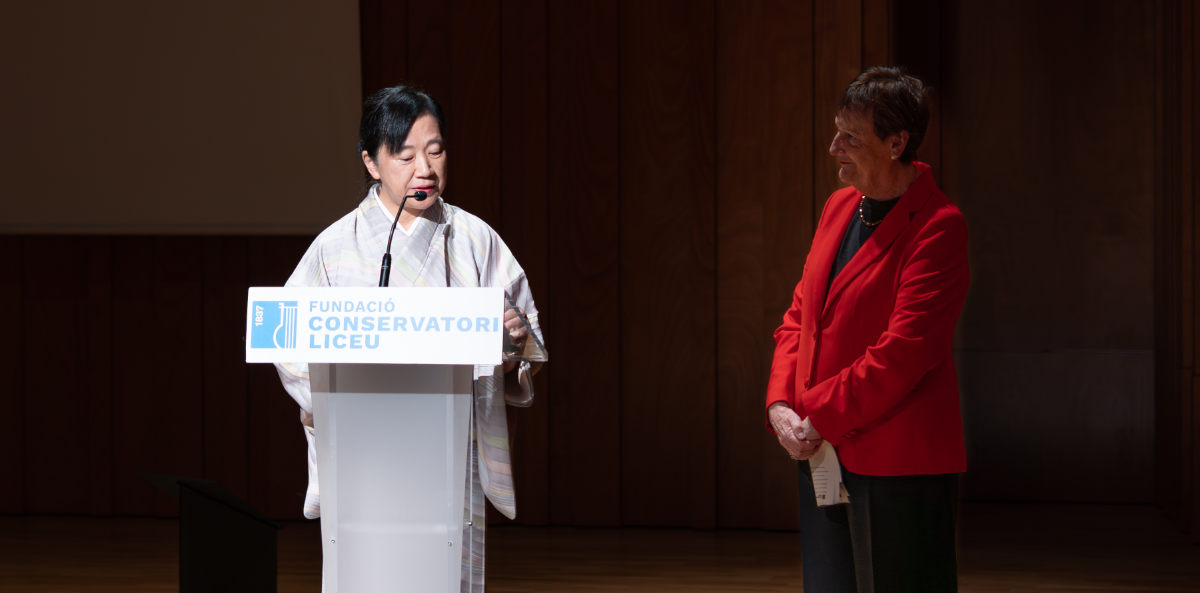
The event began with a welcome speech by Dr. Maria Serrat Martín, Director General of the Conservatori Liceu Foundation, who highlighted the great importance of the Conservatori Liceu’s relationship with Japan, which is reflected not only in the exchange of students, carried out over more than 15 years of joint work, but also in the continuous and fruitful collaboration that the Conservatory maintains with representative entities of Japanese society and culture in Barcelona, as well as its collaboration with music conservatories and universities in that country. These relationships have made it possible to host numerous artistic activities in Barcelona, such as Noh theater performances, the film series in tribute to Akira Kurosawa in 2010, the concert to raise funds for the victims of the 2011 earthquake and tsunami by Japanese students of the Liceu Conservatory in 2012, the performance by percussionist Kuniko Sato, and the concert celebrating 150 years of diplomatic relations between Japan and Spain in 2018, among many others.
Afterwards, the Consul General of Japan, Akiko Shikata, thanked the audience for attending and highlighted the joy of presenting this ancient expression of Japanese culture in Barcelona and its connection with Catalan music through the music of such an iconic composer as Frederic Mompou.
Next, the Noh masterpiece Matsukaze (14th century) began. Exploring common themes such as silence, nature, memory, and inner emotion, it tells the story of two ghost sisters, Matsukaze and Murasame, former salt harvesters in Suma, who appear in the moonlight as they remember their lost love for the exiled poet Ariwara no Yukihira. Between memories, longing, and the symbol of the sacred pine tree (matsu), the piece reflects the essence of Noh: a bridge between the earthly and the spiritual. The artists were Kanji Shimizu, in the dance performance, Zeami Motokiyo Shite (lead actor), the Jiutai choir (with Takao Nishimura and Haruhiko Hasegawa), Satoshi Tsukitaku on the Noh flute, and Naoya Toriyama and Mitsuhiro Kakihara on traditional drums.



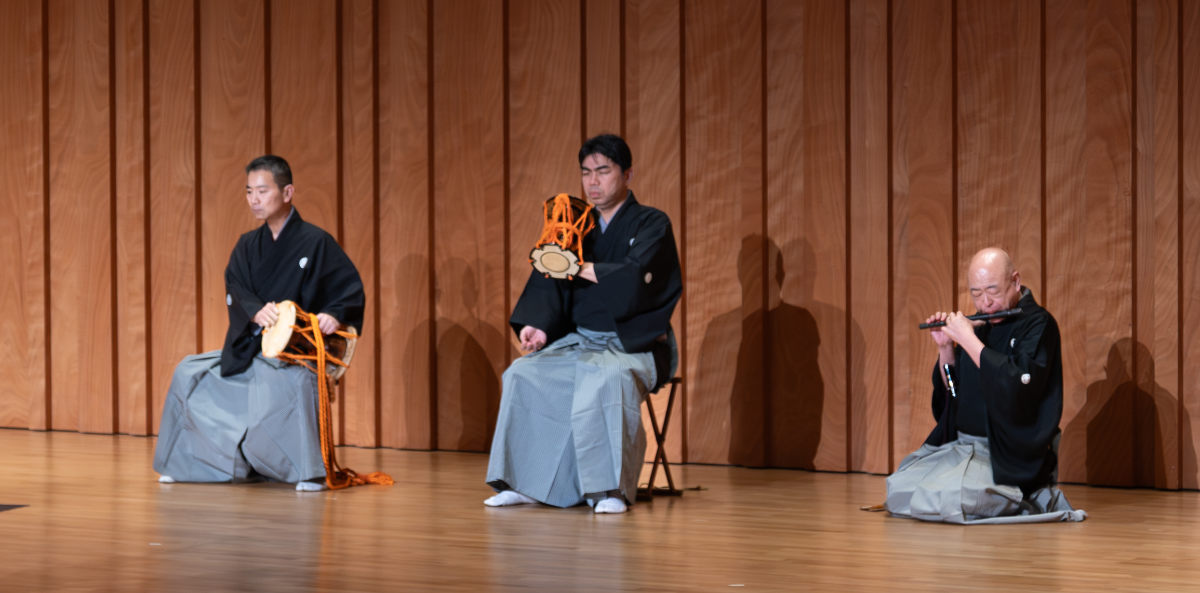
Recognized as Intangible Cultural Heritage of Humanity by UNESCO, Noh theater combines music, dance, literature, and acting. Its foundations were laid in the 14th century by Zeami Motokiyo, and many of its works are still performed today. This performance is part of Noh Reimagined 2025, a festival that explores the encounter between classical Noh and contemporary creativity through performances, new productions, and international collaborations.
The event continued with a performance by pianist Yoko Suzuki, who played some of Frederic Mompou’s most beautiful pieces: Música callada I, Impressions íntimes I–IV, La fuente y la campana, El carrer, el guitarrista i el vell cavall, Cançó i dansa VII, and Cançó i dansa IX. She was accompanied by gestural dance derived from Kanji Shimizu’s Noh theater.
This activity is one of many initiatives promoted by the Conservatori Liceu Foundation in collaboration with Japanese institutions, reaffirming the institution’s commitment to cultural exchange and artistic excellence, strengthening the ties between Japanese and Catalan culture.